

When you choose a sleeping bag liner, there are a few factors to consider. The most important factor to consider is whether or not the liner is comfortable for you. You should also ensure that it keeps you warm and dry.
Liners for sleeping bags come in a variety of materials. Others are made of natural materials, while others are made of synthetic materials. Synthetic materials are more expensive than natural ones, but they are also more durable. Natural materials are typically less expensive, but they are not always as long-lasting.
Sleeping bag liners are also available in a variety of thicknesses. Some are designed for hot weather, while others are designed for cold weather. The amount of insulation provided by the liner is determined by its thickness.
Finally, you must determine how much a sleeping bag liner will cost you. Although there are some that are quite inexpensive, they may not provide the amount of comfort or protection that you require.
How to choose a sleeping bag liner

A sleeping bag liner is a piece of fabric that serves as a protective and insulating covering for a sleeping bag. It’s usually made of cotton, silk, or wool, but it can also be made of synthetic or natural fibers. Liners can be used to boost a sleeping bag’s warmth, protect it from dirt and moisture, and give an extra layer of comfort.
Fabric
There are a few things to think about while selecting a sleeping bag liner. The first is the fabric type. The most common fabric used for liners is cotton, but wool and silk are also popular choices. Each fabric has its own set of benefits and drawbacks.
Cotton is the most cost-effective fabric, but it does not insulate as well as wool or silk. Wool is more expensive than cotton, but it prevents stains better and lasts longer. Silk is the most expensive fabric, but it also has the most warmth and is the most comfortable to sleep in.
Size
The size of the liner is the second thing to consider. Liners are available in a range of sizes, ranging from small to extra-large. It’s important to select a sleeping bag size that fits comfortably within your sleeping bag. If your sleeping bag’s liner is too small, it won’t provide enough insulation and may even make your sleeping bag colder. It will be cumbersome and uncomfortable to sleep in if the liner is too large.
Weight
The weight of the liner is the third thing to consider. Liners are available in a variety of weights, from extremely light to quite hefty. The warmer the lining, the heavier it is. The heavier the liner, however, the more difficult it will be to travel on your adventures.
Climate
The climate is the fourth thing to consider. If you want to use your liner in a cold region, a heavier liner is recommended. If you want to use your liner in a warm environment, a lighter liner is recommended.
Price
The price is the fifth and final thing to consider. Liners are available in a wide variety of prices, from very low to extremely high. Finding a liner that meets your budget is important. If you want a high-quality liner, you may have to pay a little more. If you’re looking for a less expensive liner, you can typically locate one that’s just as nice for less money.
These five considerations should be kept in mind while selecting a sleeping bag liner. You will be able to select the ideal liner for your needs by doing so.
Choose a sleeping bag liner: Type
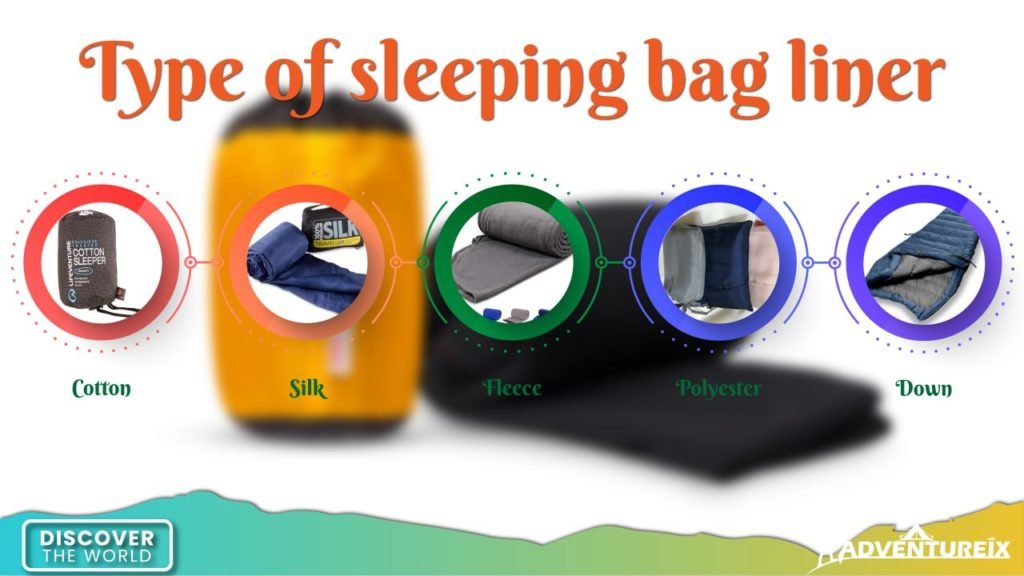
Sleeping bag liners are made of a range of fabrics, each with its own set of benefits.
Cotton liners are one of the most popular types of liners since they are affordable and effective at keeping you warm. Cotton liners, on the other hand, are bulky and may not be the greatest option if you’re looking to save room in your backpack.
Silk liners are a popular choice because they are light and small. Additionally, silk liners are also hypoallergenic, making them a suitable alternative for those who suffer from allergies. Silk liners, on the other hand, can be more expensive than other liners.
If you really want a liner that is both warm and lightweight, fleece liners are a fantastic option. Fleece is also a breathable material, so if you sweat a lot at night, it will keep you comfortable. Fleece liners, on the other hand, can be more expensive than other liners.
Polyester liners are a wonderful alternative if you’re looking for a lightweight, low-cost liner. Polyester liners, on the other hand, aren’t as warm as other options, so they might not be the greatest choice if you’re looking to save space in your backpack.
Down liners are the warmest liners on the market, but they’re also the least expensive. If you expect to camp in cold weather, down liners are a fantastic choice, but they may not be necessary if you only plan to use your sleeping bag in milder weather.
Choose a sleeping bag liner: Materials

The material used to line a sleeping bag can have a significant impact on how comfortable you are while camping. When it comes to materials, there are a few distinct choices. Cotton, polyester, and down are the most common.
Cotton is a breathable and absorbent natural material. It’s a fantastic option for people who sweat or get hot when sleeping. Cotton, on the other hand, does not insulate as well as some of the other materials.
Polyester is a lightweight synthetic material that dries quickly. It is an excellent choice for people looking for a well-insulated material. Polyester, on the other hand, is not as comfy as cotton or down.
Duck or goose feathers are used to make down, which is a natural substance. It’s a wonderful option for people looking for a cloth that’s both breathable and warm. Down, on the other hand, can be more expensive than cotton or polyester.
Frequently Asked Questions(FAQs)
Should I use a liner for my sleeping bag?
It might not seem that important to add a liner for your sleeping bag but sleeping bag liners do have their uses. In fact, by using a sleeping bag liner you will be able to add a layer of protection between your dirty body and the sleeping bag’s interior.
How many degrees does a silk liner add?
While it is true that cotton, polyester, and down are the most common choices for sleeping bag liners there is another choice that is a bit more pricy; silk. Even though silk liners are pricy they have multiple benefits one of which is increasing the temperature of the sleeping bag’s interior. Generally, slik liners will increase the temperature by as much as 2℃ or 35.6℉.
Is a silk sleeping bag liner worth it?
Silk liners for your sleeping bags might seem like an expensive purchase but the truth is that it can provide you with many benefits if you are an avid camper. One of the first positives of a silk liner is that it can raise the temperature for those cold camping trips. Another is that silk is an excellent material for moisture-wicking.
How do you wash a sleeping bag liner?
You can either use your hand or a machine to gently wash it but use only cool or warm water and only mild detergent. Rinse the liner well by gently squeezing it or through a gentle cycle and never wring it. Naturally, air dry the liner (doesn’t take too long) and use a cool iron of the gentle or wool setting. Surprisingly you can wash sleeping bags in a similar manner.
Conclusion
One of the most important things to have on your backpacking or camping trip is a sleeping bag. They keep you warm at night and protect you from the elements. Choosing the correct sleeping bag liner, on the other hand, is important for a restful night’s sleep. We’ll go over several things to think about while buying a sleeping bag liner in this post, such as insulation, weight, fit, and breathability. Hopefully, this advice will assist you in finding the ideal sleeping bag liner for your next camping trip!