

Sleeping bags are important in camping trips because they provide you with a comfortable and warm location to catch some z’s. However, is it always necessary to bring one of them with you whenever you go camping? The answer is surprisingly no!
Whenever you go camping you should look at multiple factors to help you decide if a sleeping bag is important to bring along. For example, you should look at the temperature, weather, location, and other such criteria to see if the sleeping bag is necessary.
A sleeping bag is a bag designed to protect a person from the cold while sleeping. The bottom of a sleeping bag is generally insulated to protect the sleeper from the ground. Sleeping bags are usually used in conjunction with a sleeping pad, which provides additional insulation.
Why is a sleeping bag important in camping?
Sleeping bags are one of the most important items to bring when camping even though sleeping bags can be expensive. They are important because they provide warmth, comfort, and protection from the elements. Sleeping bags come in a variety of shapes, sizes, and materials to suit different needs.
Some of the most popular materials used for sleeping bags are down, synthetic, and cotton. Down sleeping bags are filled with feathers and are very lightweight and compact.
Synthetic sleeping bags are filled with synthetic materials such as polyester and are less expensive than down bags. Cotton sleeping bags are the heaviest and bulkiest type of sleeping bag, but they are also the most comfortable.
Reasons Why are sleeping bags are important in camping

- They keep you warm at night: Sleeping bags are great for keeping you warm at night, especially in cooler climates. If you don’t have a sleeping bag, you may find yourself waking up in the middle of the night feeling cold and uncomfortable.
- They provide a comfortable place to sleep: Sleeping bags provide a comfortable place to sleep, which is important when you’re camping. If you’re sleeping on the ground, a sleeping bag can provide a bit of cushioning to make your sleep more comfortable.
- They’re great for camping in all seasons: Sleeping bags are great for camping in all seasons. In the winter, they’ll keep you warm at night, and in the summer, they can provide a bit of insulation from the heat.
- They’re easy to carry: Sleeping bags are easy to carry, which is important when you’re camping. You don’t want to have to lug around a heavy mattress or blankets, so a sleeping bag is a great option.
- They come in a variety of styles: Sleeping bags come in a variety of styles, so you can find one that’s perfect for you. There are mummy bags, rectangular bags, and even bags that zip together to make a double.
Sleeping bag features
You should know that sleeping bags are one of the most important pieces of gear for any backpacking or camping trip. They provide a comfortable, warm place to sleep, and can be used in a variety of different weather conditions. There are many different features to consider when choosing a sleeping bag, such as temperature rating, weight, packing size, and comfort. Here are some of the most important features to look for when choosing a sleeping bag:

Temperature rating
This is the most important factor to consider when choosing a sleeping bag. Make sure to choose a bag that is rated for the lowest temperature you expect to encounter on your trip.
Insulation
Another factor that is related to the temperature of your sleeping bag is insulation and this is very important when camping. Sleeping bags in general will use down or synthetic material as insulation. The primary purpose of insulation is to keep you warm and dry in whatever location you are at. If you want to keep feet warm in sleeping bag then you make it warm in some other ways.
Weight
Sleeping bags can range in weight from just a few ounces to several pounds. If you are planning on carrying your sleeping bag long distances, or if you are trying to save weight, choose a lighter bag. If you are wondering how heavy should a sleeping bag be the answer is around three or four pounds.
Packing size
Sleeping bags can be very bulky, so consider how much space you have to pack them. If you are short on space, choose a sleeping bag that compresses well.
Comfort
Make sure to choose a sleeping bag that is comfortable for you. Consider the type of insulation (synthetic or down), the shape (mummy or rectangular), and the size (regular or oversized).
Weather
A key component of camping is figuring out the weather of the location you are going camping. Depending on the weather you might have to change your camping gear loadout. In the case of sleeping bags, the type of it will change if the weather is different. Rainy or cold weather means you will need water or a rainproof sleeping bag. Lighter sleeping bags will be important when camping in warmer climates.
Location
Depending on the location of your camping trip it will be important for you to get the correct sleeping bag. Whether you will bring a sleeping bag will also rely upon the location you got camping.
Types of sleeping bags
There are many types of sleeping bags available on the market, each designed for a specific purpose. Some are great for cold weather camping, while others are best for warm weather trips. Here is a list of the most popular types of sleeping bags:
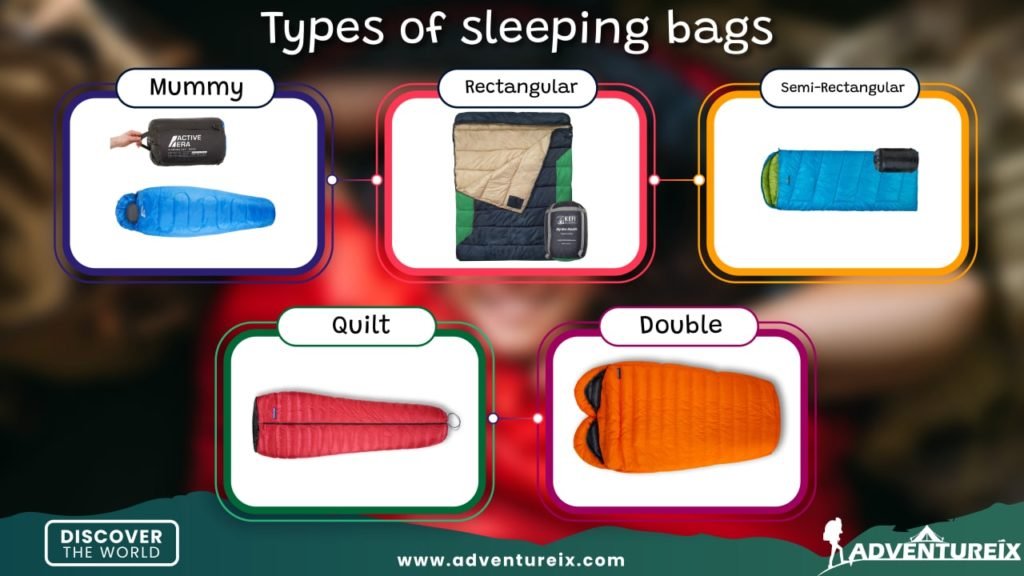
Mummy bags
Mummy bags are close-fitting, tapered sleeping bags that provide maximum warmth. People call them mummy sleeping bags because of their resemblance to ancient Egyptian mummies.
Rectangular bags
Rectangular sleeping bags are the most versatile and can be used in a variety of climates. They are not as warm as mummy bags, but offer more room to move around.
Semi-rectangular bags
Semi-rectangular sleeping bags are a cross between mummy and rectangular bags. They are narrower than rectangular bags, but not as tapered as mummy bags.
Quilt bags
Quilt bags are essentially blankets with a hood. They are not as warm as mummy or rectangular bags, but are much lighter and easier to pack.
Double bags
Double sleeping bags are designed for two people. They are usually rectangular or semi-rectangular in shape.
Now that you know the different types of sleeping bags available, you can choose the one that is best suited for your needs.
Sleeping bag temperatures
There have been many research projects that aimed to find the best temperature for sleeping for humans. According to one by Public Health England, the best range for sleeping will be 18 degrees celsius plus minus 0.5 degrees celsius.
Most sleeping bags are designed for use in temperatures above freezing, with a few exceptions for bags specifically made for winter camping. The temperatures listed on a sleeping bag’s tag indicate the lowest temperature at which the bag will keep the average person comfortable.
| Comfort Rating | Extreme Rating |
| 30 – 50°F | -40 – -30°F |
| 20 – 30°F | -50 – -40°F |
| 10 – 20°F | |
| 0 – 10°F | |
| -10 – 0°F | |
| -20 – -10°F | |
| -30 – -20°F |
Alternatives for sleeping bags
As we have said before sleeping bags are important in every one of your camping trips. Personally, I don’t like hauling around a four to five pound sleeping bag if I can help it. Instead, I have looked for suitable alternatives wherever they are applicable.
Here are some of the best ones I found:
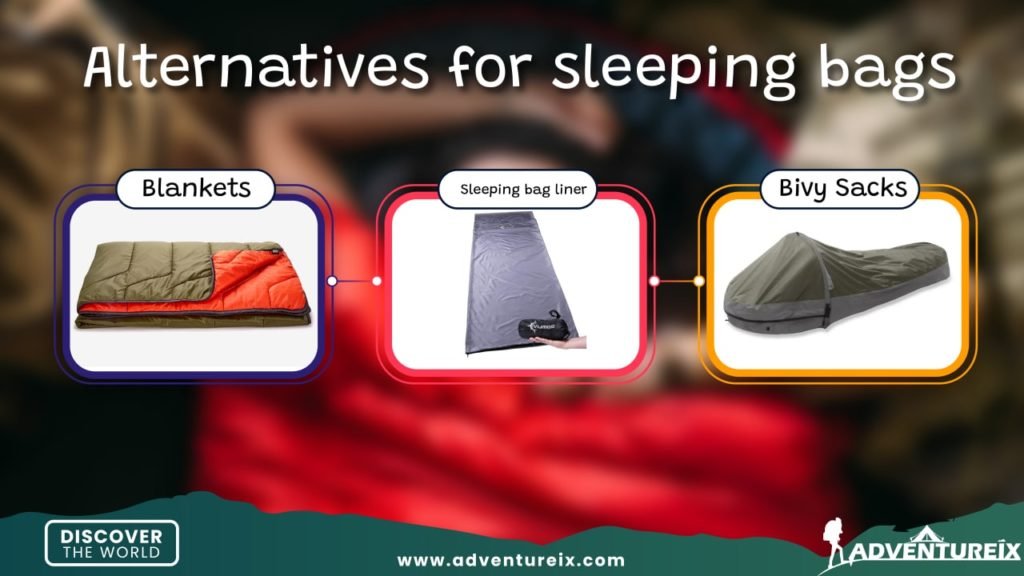
Blankets
Taking a wooled or synthetic blanket as an alternative is much more popular than I thought it would be. In fact, when the weather and location are right you might find sleeping with a blanket is much more enjoyable than you imagined.
As long as it isn’t too cold you can sleep with a blanket while staying close to a fire.
Sleeping bag liner
These liners are fleece bags that fit in your sleeping bag and increase the temperature inside of the bag. But on summer nights when the temperature doesn’t fall below 10℃ you can just use it by itself. There are multiple designs available and come in multiple temperature ranges.
Bivy sacks
These sacks are basically waterproof-breathable shelters that are usable by one person. If you combine a sleeping pad with a bivy sack you will be able to sleep comfortably unless the weather or temperature is really bad.
Frequently Asked Questions(FAQs)
Can I sleep in warm clothing instead of a sleeping bag?
Due to unavoidable circumstances, I have had to sleep without a sleeping bag with just my clothing to keep me warm. I used my sheets and covers as insulation and wore all my spare clothes. This did keep me reasonably warm but I wouldn’t recommend it as standard practice. Most clothes are meant to give you mobility and not warmth so if you are camping in a rainy area or in a low temperature location sleeping with your clothes on is a very bad and dangerous idea.
How to stay warm without a sleeping bag?
If you haven’t got a sleeping bag but wish to keep warm then here are some suggestions for you. First of all either build or find shelter from the elements. To build a suitable shelter you should keep a tarp, poncho, or a garbage bag just in case. For insulation, you can use natural materials such as leaves filled inside a plastic bag. And for warmth, you can obviously build a fire but in case it’s raining you should cuddle with your partner or wear warmer clothes.
Are blankets a good alternative to sleeping bags?
As mentioned above woolen or synthetic blankets are a viable alternative for sleeping bags. Even though sleeping can be important in camping sometimes you just don’t want to carry one. During those times you can get away with sleeping in blankets. We recommend using a blanket only when you are camping in locations where the temperature is above 10℃ and only sleeping with a thick blanket.
How long does a sleeping bag last?
Sleeping bags are built to last even those that are cheaper because the material used and method of production ensure that they last. Sleeping bags that are cheaper if properly taken care off will last you up to 5 or 6 years. And those made from high-quality material will last between 10 to 15 years.
Conclusion
A sleeping bag is a protective bag for a person to sleep in, typically used outdoors. Sleeping bags are usually mummy-shaped, meaning that they are narrow at the feet and shoulders, and widest at the hips. This shape helps to retain body heat.
Sleeping bags are important in camping for a variety of reasons. They keep you warm at night, provide a comfortable place to sleep, and can be used as a blanket during the day. Sleeping bags come in a variety of shapes, sizes, and temperatures to suit your needs. Choose a sleeping bag that is appropriate for the season and the type of camping you will be doing.