

A full moon night on the hills, under the tents, cold air passing by, a bit of country jazz, and you sitting beside your favorites, holding a cup of cold wine…wait, what? Where are the ice cubes? The food went bad as well?! Did the temperature just ruin our whole mood of the camping trip even in our imagination? Wonder what it would do in real life? I mean you have been planning this outing for eons, and when you could finally match your calendar and wallet to go camping on the hills, you have to give it a second thought just because you cannot figure out how to keep that food cold while camping or traveling? Didn’t it just throw cold water on our excitement?
Guide on how to keep food cold while traveling
Summer vacations are coming to an end, and a lot of people are planning an outdoor adventure. However, the biggest ice block in their way remains the question, how do we keep the food cold longer in the warm air?
It should be on the top of the checklist to know how to keep food cold while camping because it makes all the big difference in whether you’ll have a fabulous or miserable experience. Even the frozen food gets melted at some point!
Man! It indeed is hard to keep food cold while traveling, especially if you’re traveling long miles in remote places or camping outdoors.
Thankfully, in this age of modern tech, it is not really hard to come up with methods to eat sufficiently on camping trips. And today here I will tell you 12 never-failing tips and tricks for keeping your food cold while planning an outdoor adventure that doesn’t even need the use of tech.
What You Will Be Getting Here
This article is divided into 2 parts. The first part talks about 10 techniques to keep your food cold when camping trip, and the final part suggests the best coolers for keeping food cold.
To keep food cold when going traveling, keep in mind it is really pre-frozen when you pack food in a well insulated cooler. Press the lid of the cooler tight with ice cubes to cover the gaps and keep it out of direct sunlight as much as you can.
There are some other factors too that you need to keep in mind to maximize the cold time you have while you’re on the roads. So, ready to store frozen foods in ways that you have never done before? Let’s dig in!
1. Know the ideal temperature to store food
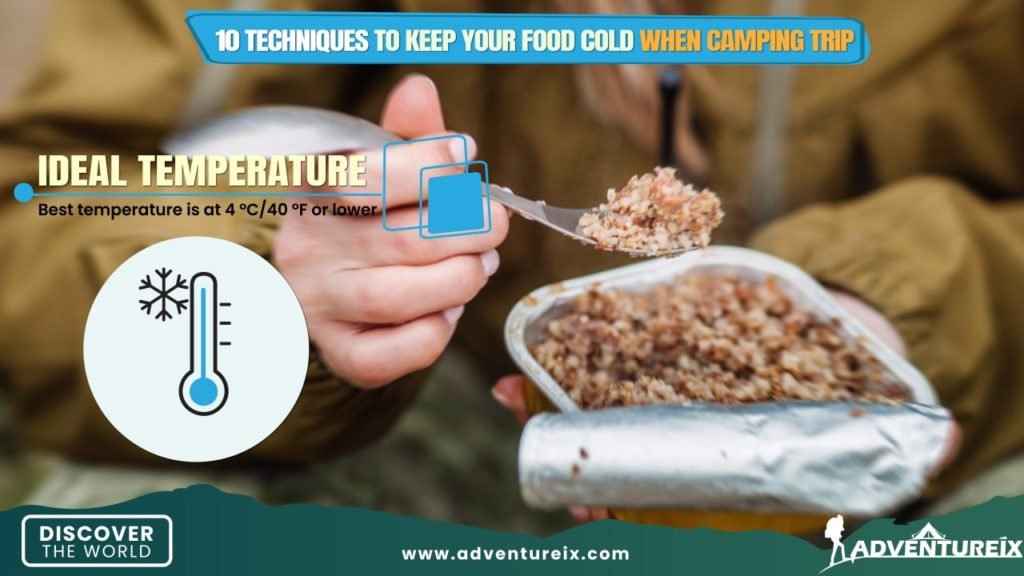
Generally, food can be kept fresh in a container for 1-48 hours at room temperature. Others start deteriorating after that time period. To keep your food safe, set your cooler’s temperature at 4 °C/40 °F or lower. You can also check online the safe temperature to store the type of food you are taking along on your trip.
2. First, freeze the food!
Needless to mention that freezing things a day beforehand will make the whole cooling process a lot easier. Since your food will reach its lowest temperature in a freezer after around 24-48 hours, you have to store it in the freezer for a minimum of a day before you leave.
By the way, for pre-freezing, a deep freezer is better than a conventional domestic freezer since it can keep food fresh and colder than a standing freezer. Raw meat, bagged vegetables, water bottles, carbonated beverages, and certain fruits can stay frozen.
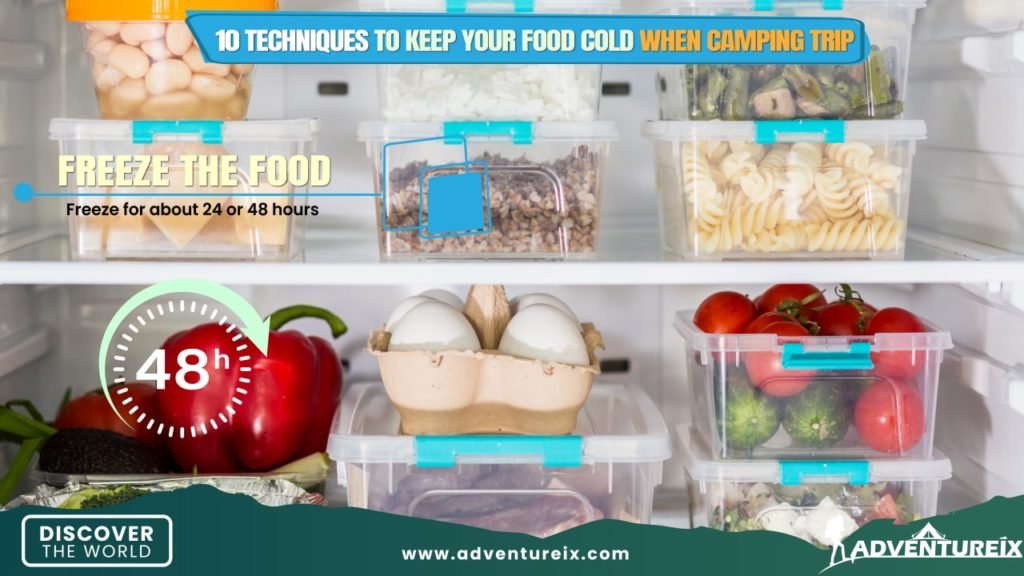
To store food frozen for as long as possible, you’ll need a cooler. The frozen food items act as ice packs or cubes in the cooler, keeping other perishable foods cool.
Though adding ice to the cooler with your food is usually a pretty good idea, if you put sufficient frozen items, your food will stay cold for a long time while traveling with it and save you from food poisoning.
3. Don’t forget to freeze the water!
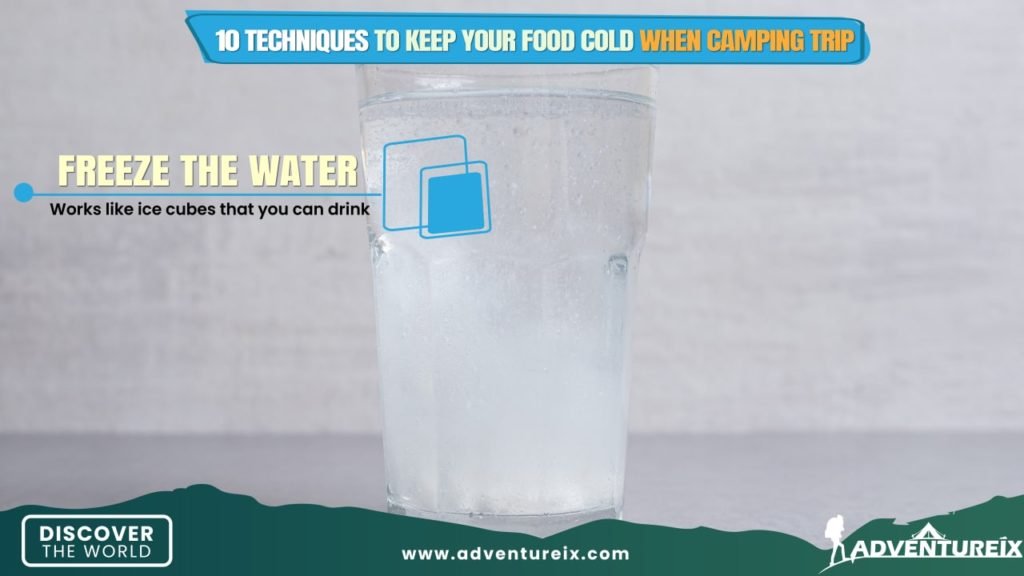
If you are traveling in your own car, you might consider carrying frozen bottles of water. It will help you in two ways: first, it will work just like ice cubes and help keep other foods cool, and second, when it’s melted, you can drink the water.
4. But did you cool your cooler?
A lot of the time, coolers are not really cold when the food and ice are in them. It’s a wise idea to pre-chill the cooler by putting a bag of loose ice in it a few hours beforehand.
And before you get the cooler packed, toss out the ice. Thus, the cooler will not start out at room temperature but will stay cold and it will equally keep your food cool just as it was inside the fridge.
4. What ice did you pack?
When making the menu for the camping, ask yourself these questions: will you be carrying a food cooler or a cooler bag? If you do, will there be any scope to buy more ice cubes or crushed ice? And if there is no ice, raw meat and other perishable food will start going bad. This could be a big trip disaster.
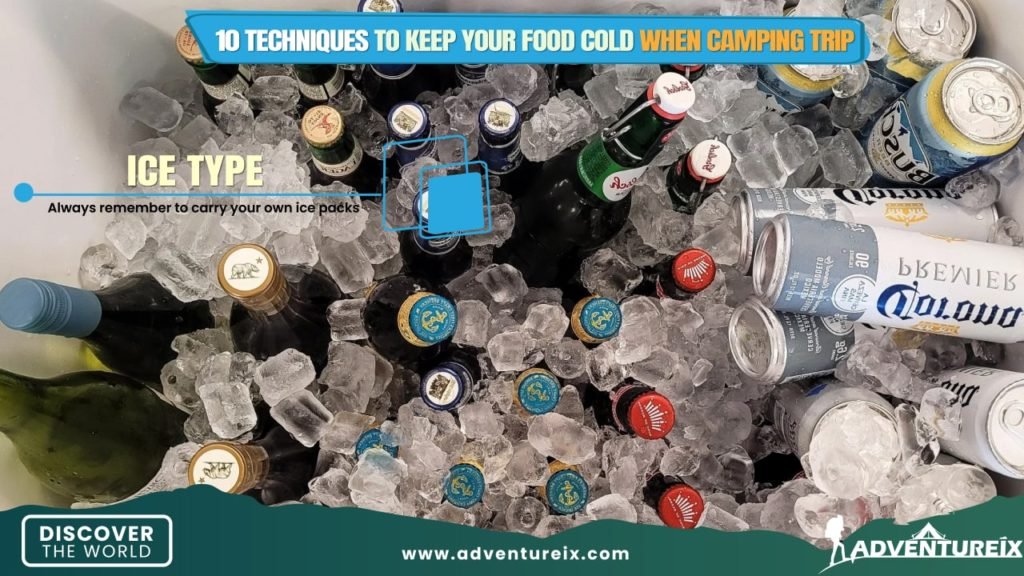
So, always remember to carry your own ice packs! Unfortunately, the ice you got from the local gas stations is not going to be the best cooler, trust me. It might be the easiest way out and can be used to keep your drinks cold. But when it comes to keeping your food cold, it will turn into melted ice before you know it, and your food will turn mushy, hot, or even both.
Carry some crushed ice, ice packs, frozen gel packs, ice cubes, and if you can properly handle dry ice, then that too.
5. Choose ice That Lasts
Block Ice:
A big block of ice, put in the bottom of your cooler, is the finest option. Large ice blocks take much longer to defrost, allowing you to keep your food colder for way too long. The perk is that the ice will not turn into a sloppy mess with your food hovering in the water.
Moreover, prepare your own ice blocks beforehand by freezing water in plastic water bottles or sealed plastic containers. Also, the melted ice water from the ice of the container and frozen water bottle or jar is ideal for emergencies.
Dry Ice:
Dry ice can be found in your local grocery stores. This is an amazing alternative as dry ice keeps the food dry and helps to last the longest. Especially, it’s highly recommended to keep perishable food and raw meat cold.
However, remember to handle dry ice with delicacy. If you cover your cooler in paper, dry ice will burn your skin and wreck your cooler. Also do not even keep any food products that you don’t want to be frozen next to dry ice since it will frost anything that is put next to it.
Ice Packs:
Make use of the ice packs to keep your food and drinks cool for longer. Ready ice packs are available online as well as in grocery shops. Such ice packs can be used several times and will keep your food cold for up to 48 hours!
Furthermore, you can prepare your DIY ice packs by freezing water in plastic bags if you don’t want to invest any extra bucks for it. The homemade ice pack can also be prepared from frozen vegetable bags. Moreover, when you have sautéed them, you can enjoy the contents.
The best thing about ice packs is they come in handy if someone’s hurt while camping.
6. How many coolers did you get?
If you have enough budget and space, it is best to have 2 coolers. There are various advantages of carrying two coolers. One to keep the food frozen and the other for beverages.
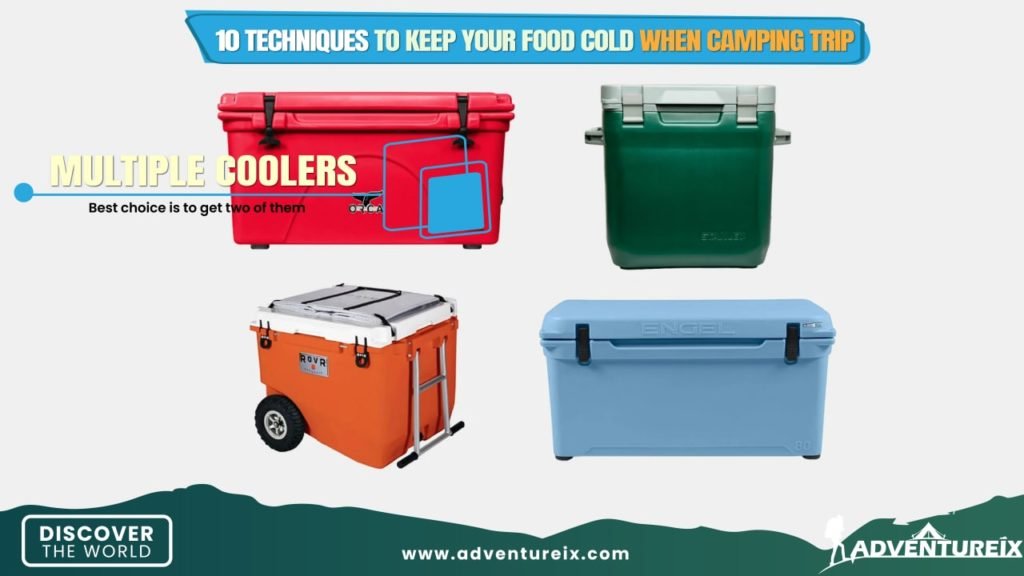
For obvious reasons, you will open and close the beverage cooler more frequently, allowing hot air to enter while cold air leaves. Therefore, it will help you make sure that the food cooler is only used when it’s extremely needed. This way, you can keep your food cold while traveling and save the frozen foods from melting ice water.
7. Are you packing the cooler right?
Did you know that there are the right ways to set the cooler? Of course, you wouldn’t want to go food hunting through frozen food to look for an item nor would you want to open and close the cooler frequently.
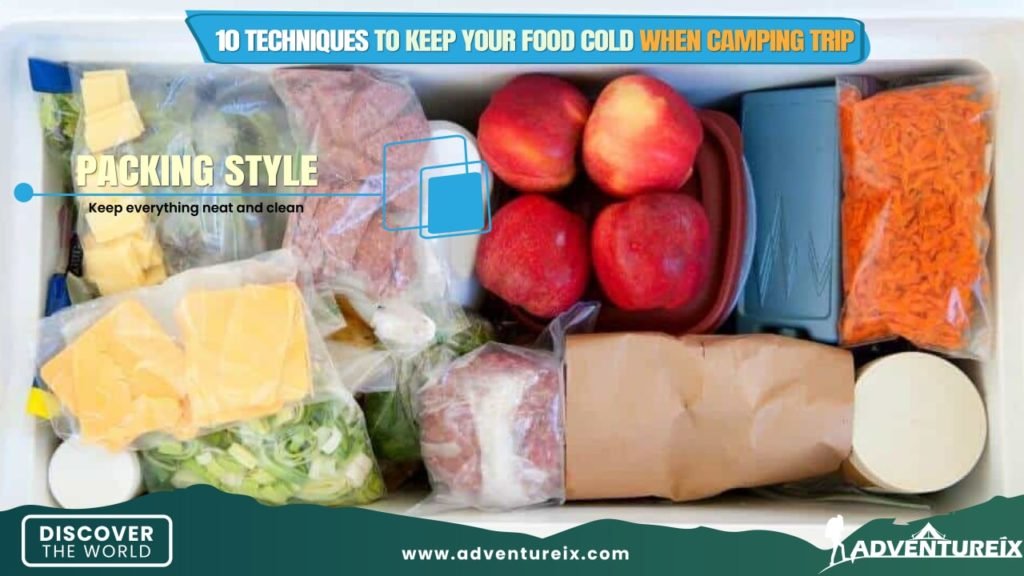
If you don’t want to get into all these messes, make sure you are loading your cooler properly in the following ways:
- Start with a block of ice or crushed ice for your first layer of the cooler. Carry block ice if the camping is longer than a couple of days.
- On top of the ice, place frozen meat. Make sure to store it in sealed packets so that it doesn’t affect nearby items as it defrosts.
- Place an extra layer of ice blocks on the meat if you have any room.
- Now, straight on the ice, place whatever dairy products you have.
- Then put the food that’s been sealed in its own container or plastic bag. Food that you will eat or drink more often such as beverages, toppings, hamburgers, and munchies, should be on the top layer.
- If you want to preserve your food cold for more than 72 hours, your food should not occupy over 60% of the cooler’s storage facility.
- Fill the rest of the space with ice.
8. Don’t forget to make the cooler air-tight
The key to keeping your food frozen and cold for longer is making the cooler air-tight. In addition, the more you fill the cooler with ice, the longer you can keep food cold while traveling. Place ice packs in the bottom, with the bulk of your snow on top and surrounding the foodstuff in the center. As cold air descends, don’t forget to stack the ice on top.
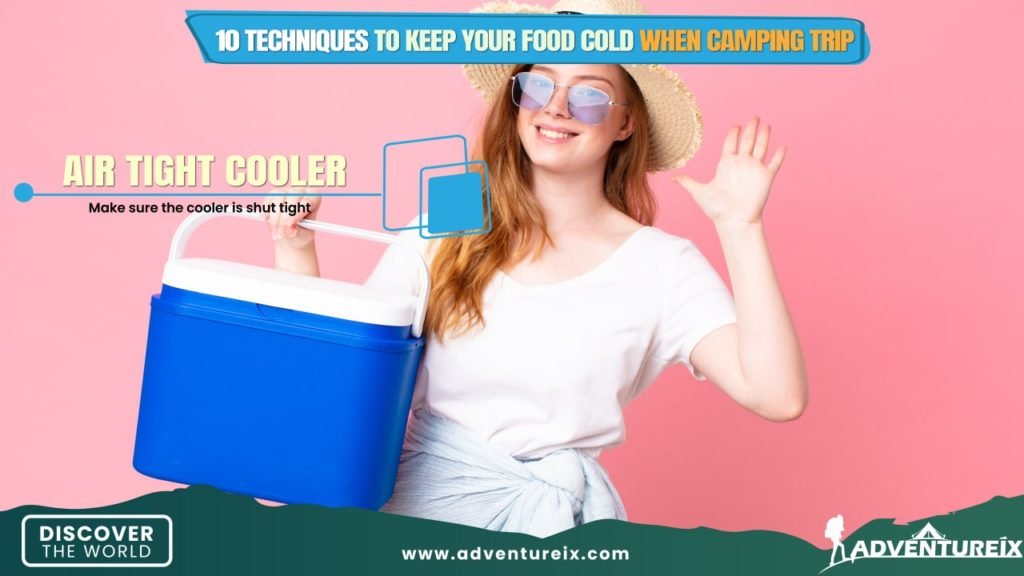
The more air passes through the cooler, the faster your food gets warm. Fill every open space with an ice pack or frozen water bottles.
9. Wrap the food in aluminum foil
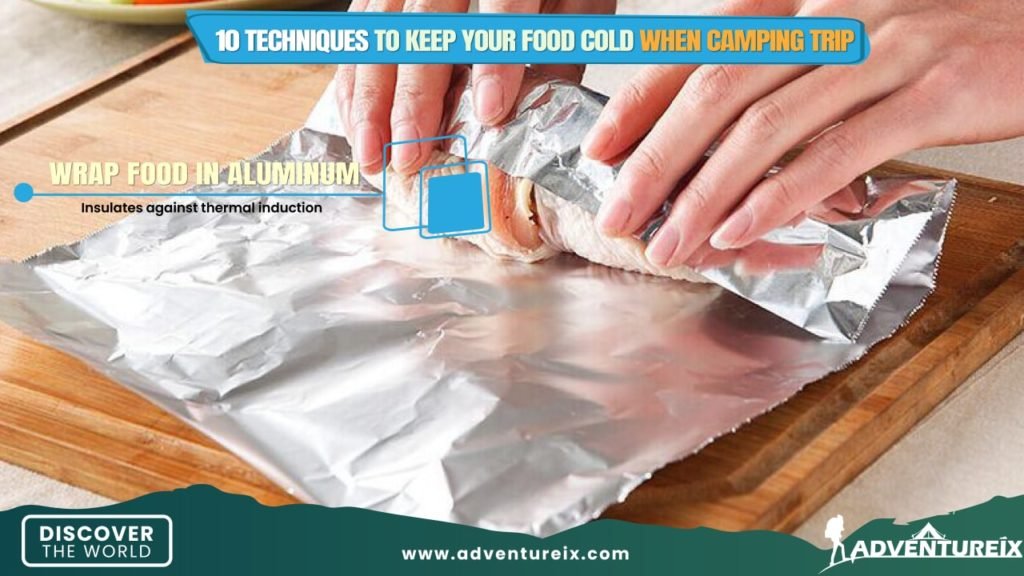
Aluminum foil insulates a container and prevents it from warming. And it is done by insulating against thermal conduction. Therefore, it’s a good idea to use an aluminium foil along with your cooler to keep your food cold for longer.
10. Do Not Place Your Cooler in the Trunk
Even though coolers can withstand high heat, the contents in your cooler will heat up sooner if the external temperature rises. And the trunk is one of those places that provide higher external temperature.
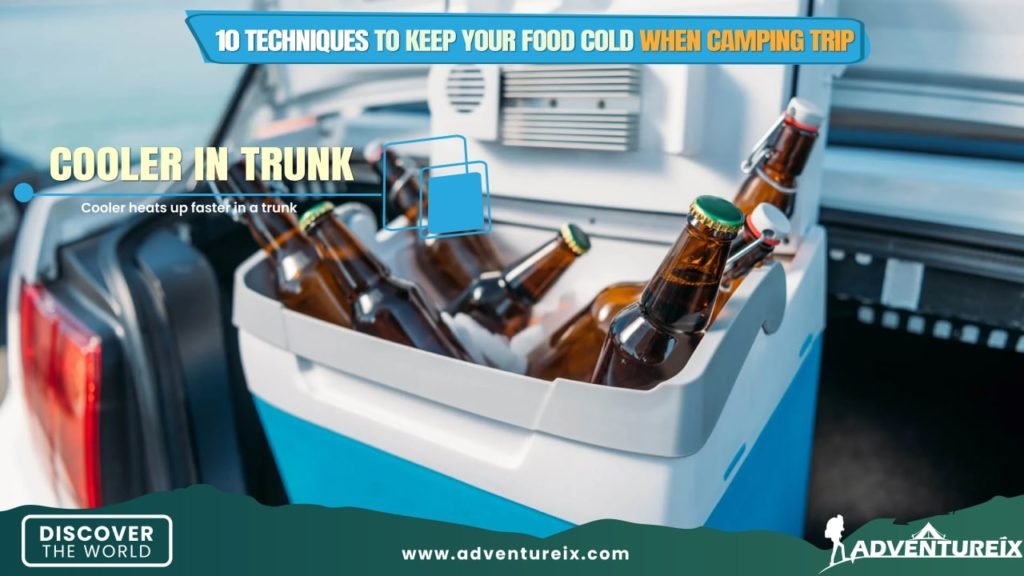
Therefore, place your cooler in the rear seat area. Thus, storing the cooler inside your air-conditioned vehicle will help you to keep your perishable cold for a longer time.
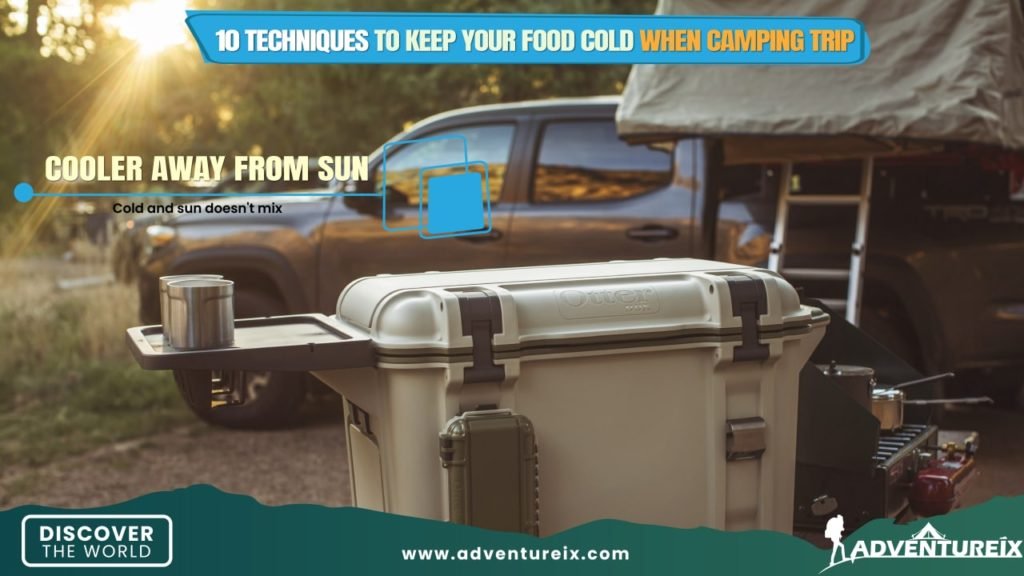
11. Keep your cooler away from the sun
Yes, it’s a must! Always put your cooler out of the sun, and if required, wrap it with a sheet or mat. Keep your cooler in a shady area away from strong sunlight once you’ve arrived at your site. As the sun moves across the sky, you may have to reposition the cooler in different spots during the day.
Moreover, you can wrap your cooler with a blanket or sheet for added insulation.
12. Get a good quality cooler!
Choosing the right cooler to keep your food cold while traveling or camping is the most crucial decision in this whole process! If you get a cheap cooler, no amount of ice can keep your food cold throughout the journey.
There is a wide array of coolers available on market, starting from cheap styrofoam to high-end steel or fiberglass coolers, and electric coolers. The most expensive coolers have the features of thermometers, shelves, handles, wheels, drainage plugs, etc.
Depending on your budget, preference, and longevity of your camp, you have to determine what kind of cooler to invest in. Most cooler use fiberglass or steel in their build to keep food cold for many days, however, styrofoam coolers are much more lightweight. If you intend to carry one for longer distances, an electric cooler is something to consider.
The best coolers in town
Yummy food, refreshing beverages, and magnificent sights – the perfect combination! A good cooler plays one of the key roles when you are going on a camping trip or on an entire adventure.
As mentioned earlier, based on your budget, preference, and requirements, you have to choose the perfect cooler. To help you with your decision making we here will give you a brief idea of some of the best coolers on the market. Check them out!
Yeti Tundra 65 Cooler
- Capacity: 65 quarts
- Size: 12 x 2 x 5 inches
- Empty Weight: 35.1 lbs


Yeti has long been a benchmark in the business as likely the greatest camping cooler manufacturer in the world. Its finest quality coolers include best-in-class ice management, unparalleled durability, and a nearly bulletproof, bear-resistant structure.
The Tundra 65 Cooler is a monster cooler with ample storage for a full weekend’s supply of beer and supplies for car campers who don’t mind the load. You could even keep bread fresh when camping if you wanted in this cooler.
Not only is the Yeti a well-insulated cooler that will store your ice as cold as possible for the longest time period, but it is arguably bear-proof too! It is insulated with three inches of permafrost.
Because the locks are of exceptional quality, they will withstand heavy loads without breaking. Another advantage is that if you want to try chilling with dry ice, this cooler will avoid the harm that dry ice would bring to many other coolers since it is immune to Tundra-level conditions.
The RTIC 65 is an amazing option if you’re willing to invest in great capacity and longevity but do not want to spend half your salary on a cooler.
It’s among the most cost-effective roto-molded (super-insulated) coolers available on the market, and it functions exactly like the high-end ones. Its strong structure can keep ice for well over a week if properly prepared.
The RTIC 65 strikes a good mix between price and quality, making it a practical choice for anyone who wants to ensure the family’s food safety for multiple days on a trip.
Hydro Flask Carry Out 20L
- Empty weight: 2 lbs. 8.3 oz.
- Volume (liters): 20 l
- Sizes: 12 l, 20 l


The Hydro Flask Carry Out is perfect for those who require a high-quality handy cooler that can be used for anything from day trips to camping and beyond.
It is compact enough to easily sling over your shoulder and won’t be taking up a lot of room in the van. It’s also unexpectedly large, as we were able to fit a whole case of seltzers and a healthy assortment of road-trip munchies inside.
We discovered that the cooler’s flat surface provides a handy coffee table between two camping chairs, and it kept things deliciously chilled for numerous days of enjoyment. You won’t find anything better than this for the price of the Carry Out.
Frequently Asked Questions(FAQs)
Can a cooler keep food cold while traveling without ice?
There are some top brand coolers that can keep food cold without ice but even those can only do so for a few hours. If you are going to travel to someplace close and only for a short period of time then you can use a cooler without ice.
How do I keep food cold while traveling on a long trip?
If you are traveling on a long trip the best thing you can do to keep food cold would be to use plenty of ice. Also, pack everything tightly and neatly inside the cooler and keep it away from direct sunlight.
Do ice packs really keep food cold?
Yes, ice packs do keep the food cold for some time. On average ice packs will keep food cold for about two to two and half hours while you are traveling. However, you should remember this time limit can vary on a number of factors. It would be best if you place your cooler with all your food someplace dark, dry, and cool as soon as possible.
How should I pack my cooler?
At the bottom, you need a layer of ice or an ice block and on top of it place your chilled to frozen food. Next, place another layer of food and then put other foods. Repeat and make sure everything is packed tightly since air warms up everything faster. Finally, at the top should be the drinks and food that you will eat first.
Conclusion
Good quality coolers might be a tad bit costly, but if you spend more time outdoors, the quality and efficiency are well worth the extra money. Plus, there are some really cool methods available to meet your cooling loads. Combine these most efficient techniques with the best quality coolers and you are ready for a road trip with some fine dining just about anywhere.