

How heavy should a backpacking sleeping bag be? It depends on a variety of things, including the type of backpacking you plan to do, the weather you expect to experience, and your own tastes. A backpacking sleeping bag, on the other hand, should weigh no more than 3–4 pounds as a general guideline (1.4–1.8 kg).
What is the purpose of a heavy backpacking sleeping bag?
A backpacking sleeping bag is a sort of sleeping bag you carry on your back when trekking or camping. They are usually smaller and lighter than regular sleeping bags, and they use various materials to save weight. Backpacking sleeping bags are an essential piece of equipment for any hiker or camper, and they can make a significant difference in terms of comfort and safety while on the path.
When purchasing a backpacking sleeping bag, there are several factors to consider, including the temperature rating, weight, and packed size. The most significant consideration is the temperature rating, since it determines how warm the bag will keep you. Weight and packed size are also crucial considerations, especially if you are traveling by car.
Backpacking sleeping bags are available in a variety of different temperature ratings, from summer bags that are only for warm weather, to winter bags that are best for sub-zero temperature environments. Choosing the right temperature rating for your needs is essential, as a bag that is too warm will be too heavy and bulky to carry, and a bag that is too cold will not keep you warm enough.
The weight of a backpacking sleeping bag is typically measured in ounces or grams. The lighter the bag, the easier it will be to carry, but you may have to sacrifice some warmth. The packed size is also important, as a smaller bag will take up less space in your pack.
Heavy backpacking sleeping bag build
Backpacking sleeping bags are typically made from synthetic or down fill. Synthetic bags are usually cheaper and easier to care for, but down bags are typically lighter and more compact. Choose the material that is right for you based on your needs and preferences.
No matter what type of backpacking sleeping bag you choose, make sure that it is the right size for you. A too-big bag will be heavy and cumbersome to carry, and a too-small bag will not provide enough warmth or space. Try different bags before you buy to find the perfect fit for you. The size is important because you need it to fit your camping tent in windy areas or your overland ground tent.
How heavy should a backpacking sleeping bag be? Part 1
In general, the heavier the sleeping bag, the warmer it will be. However, there is a limit to how much weight you want to carry when you are backpacking. For most people, a sleeping bag that weighs between two and four pounds is a good choice.
If you are planning to backpack in warm weather conditions, you can get away with a lighter sleeping bag. A summer sleeping bag typically weighs between one and two pounds. These sleeping bags are usually made with a thinner shell and less insulation, and can be compressed to fit into a small space.
When choosing a sleeping bag, it is important to consider the temperature conditions you will be using it in. Sleeping bags are typically rated by their temperature range, which is the lowest temperature that the bag will keep you warm in. For example, a sleeping bag with a temperature range of -10 to 0 degrees Fahrenheit is a good choice for winter camping.
If you are planning to backpack in a wide range of temperatures, you may want to consider buying a three-season sleeping bag. These sleeping bags are rated for use in spring, summer, and fall, and have a temperature range of +15 to -5 degrees Fahrenheit.
The weight of your sleeping bag is also an important consideration. If you are backpacking in an area with a lot of snow, you will want to choose a heavier sleeping bag to keep you warm. If you are backpacking in an area with little to no snow, you can choose a lighter sleeping bag.
In general, the warmer the temperature conditions, the lighter your sleeping bag is. For example, a summer sleeping bag can be as light as one pound, while a winter sleeping bag can weigh as much as six pounds.
How heavy should a backpacking sleeping bag be? Part 2
Type of sleeping bag affects weight. Down is lighter than synthetic. Down sleeping bags are pricey and lose insulation when wet. Synthetic sleeping bags are more moisture-resistant and cost-effective for travellers.
The size of your sleeping bag is another important consideration. Sleeping bags come in a variety of sizes, from small to extra-large. Choose a sleeping bag that is big enough to fit your height and width, but not so big that it is difficult to carry.
In general, the taller you are, the longer and wider your sleeping bag will need to be. For example, a tall person may need a sleeping bag that is 84 inches long, while a shorter person may only need a sleeping bag that is 72 inches long.
The width of your sleeping bag is also important. Choose a sleeping bag that is wide enough to fit your shoulders, but not so wide that it is difficult to carry.
In general, the wider your sleeping bag is, the heavier it will be. For example, a sleeping bag that is 30 inches wide will weigh more than a sleeping bag that is 20 inches wide.
The shape of your sleeping bag is another important consideration. Sleeping bags come in two shapes: mummy and rectangular. Mummy sleeping bags are narrower at the top and wider at the bottom, while rectangular sleeping bags are wider at the top and bottom and narrower in the middle.
Mummy sleeping bags are lighter and more compact for travelers. Some find them claustrophobic and difficult to move in. Rectangular sleeping bags provide trekkers more room to move and you can zip them together to make a double.
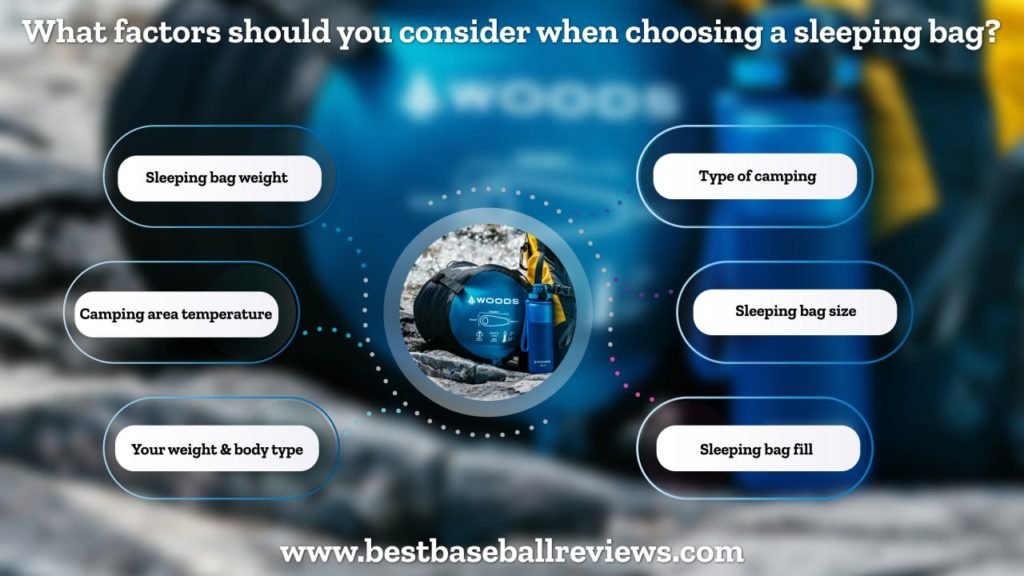
What factors should you consider when choosing a sleeping bag?
There are a few factors to consider when choosing a sleeping bag weight- the most important being the temperature you will be camping in. A bag that is too light will not provide enough warmth, and a bag that is too heavy will be too hot and uncomfortable. Other factors include the size and shape of the bag, as well as the materials used to make them.
Frequently Asked Questions(FAQs)
What is the average weight of sleeping bags?
As I have mentioned at the beginning the average weight of a sleeping bag is around three to five pounds. However, the range of sleeping bag weight is quite big with some of the heavier ones being above five pounds(2.27kg) while the ultralight ones can weigh less than one pound(0.45kg)
How to find my sleeping bag rating?
A sleeping bag rating shows the temperature range that it is suitable for and it is usually printed on the inside of the sleeping bag. So to find it just unzip the bag and look inside but remember that they can sometimes be hidden inside a pocket. Be sure to care when you wash your sleeping bag so that the tag isn’t damaged.
What is a 3 season sleeping bag?
The temperature range of a three season sleeping bag is between 15℉ to 32℉+ (-9℃ – 0℃+). Many expert hikers and campers consider the 3 season sleeping bag as the golden standard of sleeping bags. They do so because you can use this sleeping bag during the cold summer nights at high elevations and the cool nights of spring and fall.
Will a 400GSM sleeping bag keep me warm?
GSM stands for Grams per Square Meter and the higher the GMS number the more weight there is per sq meter. This in turn means that the warmer the sleeping bag will be if the number is high. However, GSM doesn’t take into account the material used so sometimes a high GSM sleeping bag might not keep you too warm due to using certain materials. If I wanted to get sciency then I could say that higher GSM increases the thermal effectiveness of the sleeping bags.
Conclusion
There is no definitive answer to this question as it depends on a number of factors, including the type of backpacking you are doing, the time of year and the weather conditions you are likely to encounter. However, as a general guide, your sleeping bag should weigh no more than 2.5kg (5.5lbs). This will ensure that it is light enough to carry on your back, but also warm enough to keep you comfortable in a variety of different conditions.