

If you’re already here, you must love the wilderness as I do. We all seek the serenity of nature to momentarily escape from our chaotic lives. However, no matter how much you enjoy the refuge of nature, it’s no fun to shiver from the biting cold while camping. Especially during the vulnerable time of the night, we need warmth to soothe us into sleep after a long grueling day. While camping in extreme conditions, a heat source is comfortable and often crucial for survival. This article will cover the best efficient ways to heat a tent safely so that you don’t freeze on winter nights.
A camping tent can shield you from many unwanted natural elements such as rain and wind. However, most tents are made from thin polyester. And that’s not enough to protect you from the frosty cold of extreme winter nights as these tents are usually not well insulated.
Therefore, you need a heat source inside your tent along with good insulation. Furthermore, I will cover a lot of heating methods. Among those, you might want to use a technique in conjunction with another one or two according to your needs.
Just like knowing how to fold a tent in easy steps, you will need to know the best ways to heat a tent. For example, it’s a good idea to insulate your tent while heating a tent with a portable heater if you are camping during freezing cold weather.
Therefore, choose the heating methods that best suit your needs and the surrounding environment.
Safety
Although I promised to tell you how to heat a tent safely, this article might cover tent heating methods with some risks. Nevertheless, I will explain the risks involved with those.
What sources of heat can we use?
Heating means converting one form of energy to thermal energy. In our households, it’s mostly electricity.
Apart from electric heaters, we can use gas-powered heaters, often convenient for cold weather camping. Additionally, if you want a more natural experience, you can even create a heating arrangement with nearby materials. A portable heater is not always necessary to keep your tent warm.
As we are often not equipped with a convenient source of electricity, I have divided the tent heating methods into two categories. Firstly, we heat a tent with electricity, and secondly, heat a tent without electricity.
How to heat a tent with electricity
First and foremost, you will require a source of electricity. Nowadays, you can find portable generators that are easy to carry around while exploring the wilderness.
By the way, you should check beforehand if there are any regulations against electric appliances at your campsite.
Portable generators
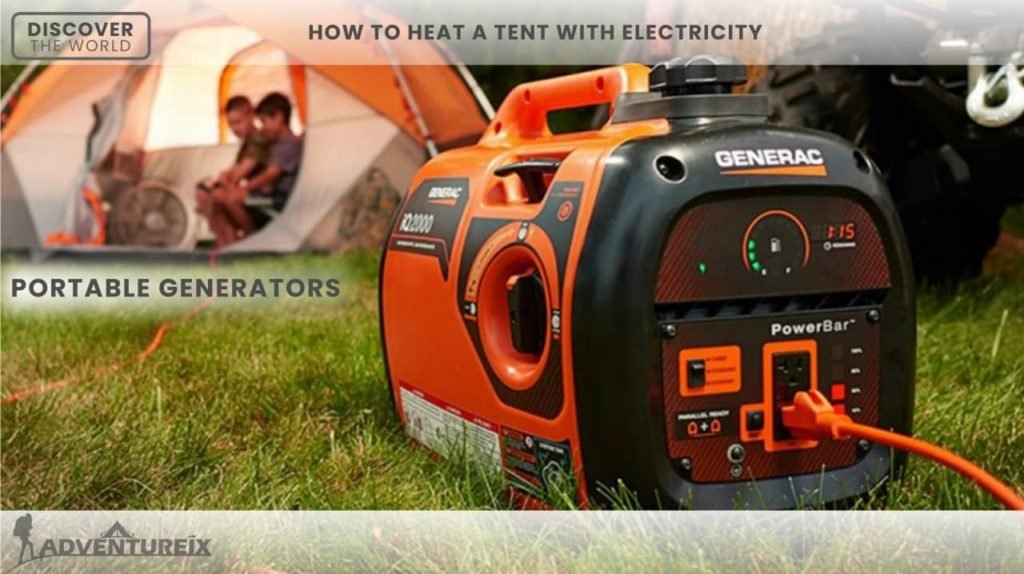
You should check the features and specifications carefully before buying your portable generator so that the weight, output, and cost are balanced to your satisfaction.
There are numerous brands and types of portable generators in the market right now. We won’t be talking about them in this article, but we will provide you with a summary of how it works and their pros and cons.
In short, a portable generator works by using gas or propane, electricity from a carport or ac connection, and even solar panels. Any of the types mentioned above of generators will be helpful for you while you are picnicking or traveling in the wilderness.
Since they can and do help, you stay connected with the rest of the world. Or, more importantly, help you to heat a tent.
Pros
- Multiple power source
- Works with numerous devices
- Lightweight
- Durable body
- Easy to use
Cons
- Not that cheap
Now that you have a source of electricity along with your camping gear, you can choose from a variety of electric heaters that can heat your tent.
Electric radiators
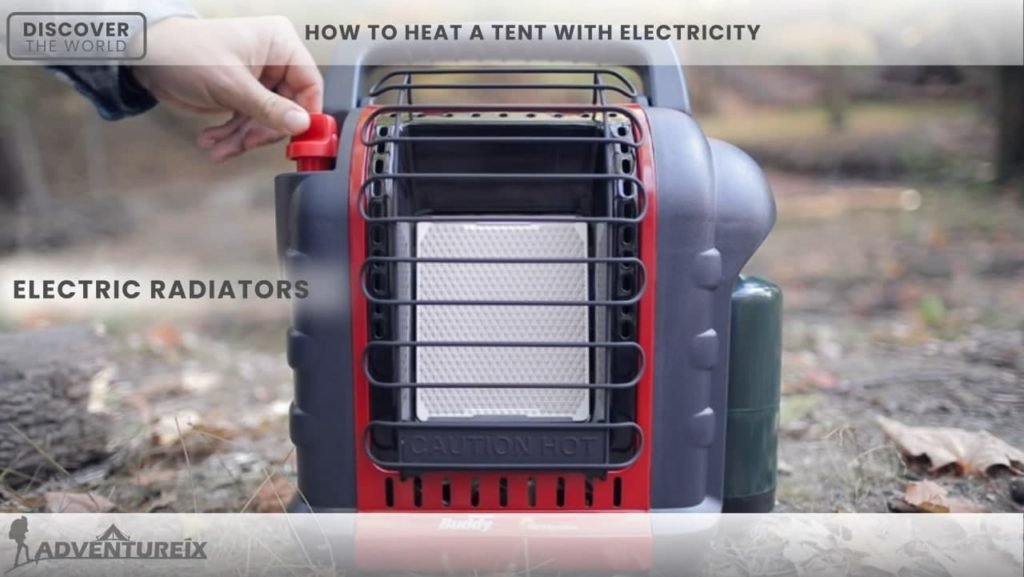
Electric radiators effectively create a warm atmosphere quickly within a tent. They are appliances that heat up heating elements within the heater using electricity. The resulting warmth spreads very fast within a tent or even a room.
To set it up, connect the electric heater with the power supply, turn it on, and place it inside your tent.
Electric radiators are very powerful. They will quickly heat a tent up with the surrounding air. These portable heaters also come with adequate temperature control settings.
Moreover, electric heaters distribute the heat evenly throughout the tent. Therefore, you can be sure that the atmosphere inside your tent will be cozy and comfortable even in freezing weather.
In addition, electric radiators are very safe as they don’t radiate any toxic gas such as carbon monoxide. Furthermore, there is no flame or risk of gas leakage that can cause a flame from these camping heaters.
However, you should put the radiant heater away from the ground and tent walls. Also, try to purchase one with the safety feature, which automatically turns the radiator off if it topples over.
Pros
- Comfortable heat
- Doesn’t consume much oxygen
- No scorching effects
- Doesn’t produce carbon monoxide
- You don’t need to carry a flammable gas tank
Cons
- You need to bring a portable generator
- Consumes a lot of power
- Dries up the air inside the tent
Electric halogen heaters

Halogen heaters are faster heaters that use halogen bulbs instead of other heating elements. The halogen gas inside these bulbs can heat a tent up very quickly. Therefore, with a halogen bulb, warmth will spread around the tent in no time.
Additionally, halogen heaters emit light that will create a beautiful atmosphere inside your tent.
Halogen heaters are one of the smallest types of heaters. Therefore, they are very portable and practical for camping nights.
However, you need to be overly careful while working a halogen heater. Halogen heaters can cause a fire if they tip over or contact easily ignited things. Therefore, keep halogen heaters away from tent walls and clothes.
Fortunately, many halogen heaters can safely hang in mid-air inside a tent.
Pros
- Small and portable
- Heats up very fast
- Emits a beautiful hue
- Doesn’t produce toxic gas
Cons
- Needs electricity
- Potential fire hazard if not placed carefully
Electric blankets
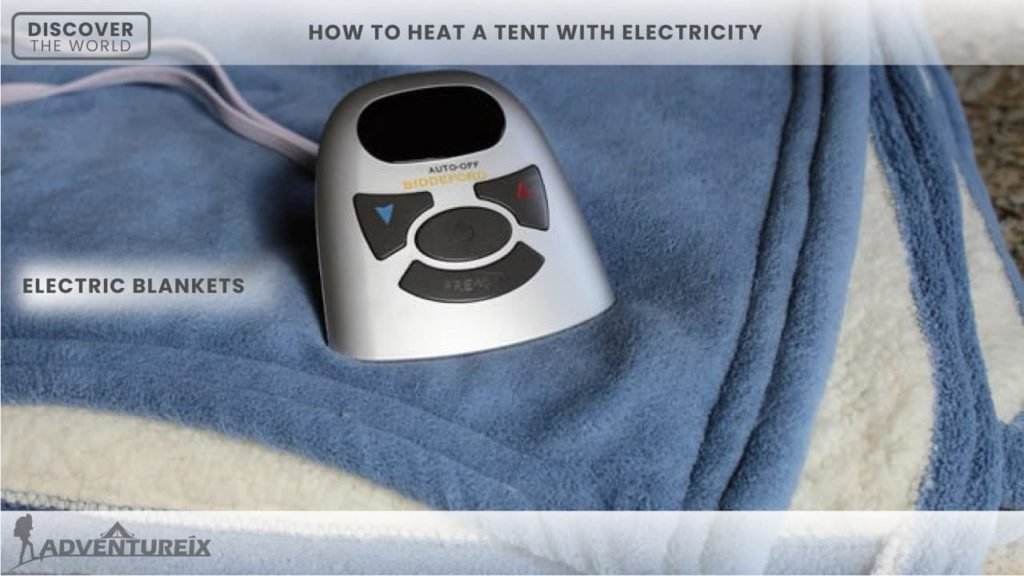
You will definitely take blankets and sleeping bags along with your camping gear if you are camping overnight. Unless you don’t plan to sleep, you need blankets to cover yourself at night and conserve your body heat.
Switch your regular blanket with a comfy electric blanket. You can save much space and weight while maintaining adequate heat for yourself inside a tent.
While electric blankets conserve your body heat like a regular blanket, it also uses electricity to create additional warmth for your body.
Additionally, you can control the blanket’s temperature with a handy controller.
Electric blankets are the most portable and lightweight heat-producing camping gear you can take. After all, you would have taken a regular blanket for camping anyway. An electric blanket doesn’t usually weigh more than three pounds. Moreover, you can easily roll an electric blanket inside your backpack. Overall, its a great choice to heat a tent up easily.
Furthermore, you may find it surprising that electric blankets can be washed in a washing machine just like your regular blankets.
Pros
- Can be folded
- Doesn’t take extra space and weight
- Can be washed
Cons
- Requires electricity
Underfloor heating carpets

Underfloor heating carpets function similarly to electric blankets. They are electric carpets that can produce extra heat by using electricity.
You can put a heating carpet under you while sleeping inside your tent in chilly temperatures. It’s a fantastic heat source that will help you stay warm and insulated with minimal heat loss.
Similar to electric blankets, they can be easily folded and carried around.
Pros
- Can be folded
- Lightweight
- Can be washed
Cons
- Requires electricity
How to heat a tent without electricity
Even if you don’t have electricity, there are multiple effective ways to heat a tent while camping outdoors. Some campsites might not allow portable generators. On the other hand, camping is all about seeking refuge in nature for some people. Therefore, they want to keep their experience as natural as possible without bringing in modern machinery. I also consider myself to be one of them.
Like me, you can find many natural options to heat your tent without any gadgets, gas, or electricity.
However, suppose you don’t have electric power and still want the convenience of modern tent heaters. In that case, you can use a gas-powered heater.
Whatever tent heating method you may prefer, I have explained the most effective ways in detail down below.
Gas-powered heaters
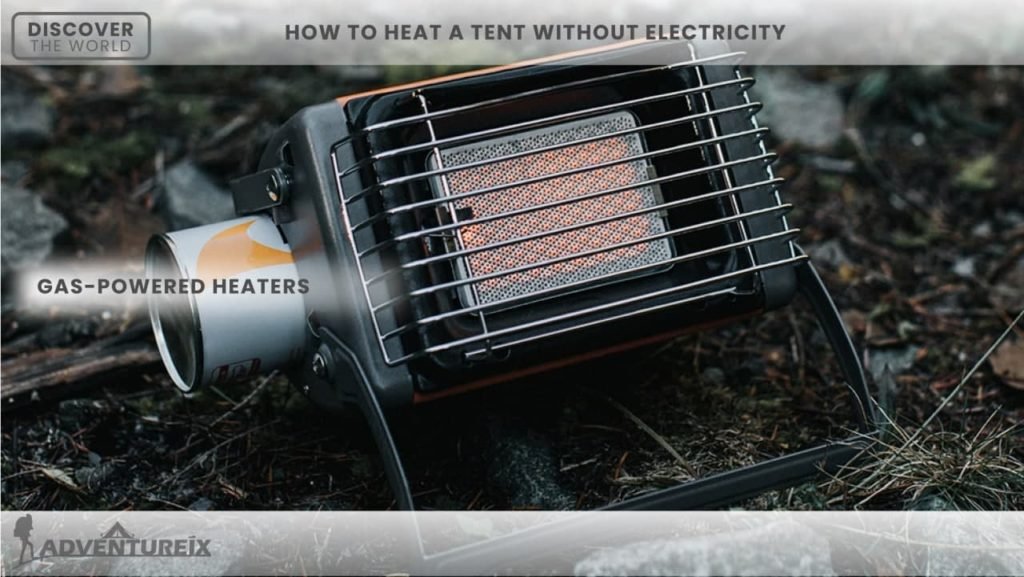
Gas-powered heaters are very powerful heaters that use gas to produce thermal energy. They will heat up your tent in no time.
Usually, gas heaters use butane, propane, or a mixture of these gases. Therefore, you will have to carry a gas tank along with your portable gas heater.
Nevertheless, propane has a lot of utility for outdoor camping. Propane can be used to also cook food on a camp stove. Therefore, propane-powered heaters can be a convenient addition to your winter camping experience.
A propane heater can get very hot. So although you won’t have to worry about a cold tent with a propane heater, you’ll have to be extremely cautious about potential fire hazards.
These gases are extremely flammable and combustible. Make sure your gas heater doesn’t have any risk of toppling over. Keep it away from any type of clothes.
Furthermore, gas heaters release carbon monoxide, which is highly poisonous. Therefore, your tent must be appropriately ventilated when using butane or propane heaters. Otherwise, and I’m not exaggerating when I say this, you may die of carbon monoxide poisoning. Usually, you should have a 4 square feet inches big vent to use a gas heater safely.
Pros
- Very effective
- Portable
Cons
- Risk of carbon monoxide poisoning
- Risk of fire
- Need to carry a gas tank
Heating rocks

This is my favorite way to heat a tent during cold nights of all the methods described here. Even if you don’t have a portable heater, heated rocks can help you sleep inside a warm tent. Hot rocks and stones can conserve heat and spread it around a cold tent.
Surprisingly, heated stones and rocks can be very effective in heating a tent. Everything you need for this method can usually be found around a campsite. It works best with a well-insulated tent.
First, you will need a campfire. However, that shouldn’t be much of a trouble. After all, the warmth of a campfire is an inseparable part of the camping experience.
After you have a fire going on, you need to heat some rocks in that fire. Hopefully, you can find enough rocks if you explore the area of your camping site. However, you need to be critical while choosing the rocks to heat an entire tent efficiently.
Smaller rocks have a bigger surface area to volume ratio, which means they lose heat faster. Therefore, you should pick bigger rocks if you want protection from the cold air for a longer time. Moreover, you should choose an adequate number of rocks for the same purpose.
In addition, don’t pick rocks that might contain water inside. Those rocks have a tendency to burst when the water inside gets heated.
Next, you need to heat these rocks. By the way, you don’t need to put the rocks inside the fire. It might become challenging to take them out of the fire later. Instead, placing the stones around the fire should be enough to sufficiently heat them.
Once the rocks are heated, place the hot stones around the tent floor. Be extremely cautious while handling the rocks. Avoid touching them with your bare hands.
Don’t put all the rocks together. Instead, you should place them in different parts of the tent to distribute the heat evenly around the tent.
Moreover, covering the hot rocks with aluminum foil can conserve the heat for longer. If you don’t have aluminum foil, a rag might do.
Nevertheless, you should be extremely cautious while handling the rocks. Rocks and stones can get extremely hot. Keep the stones at a safe distance from your body or any type of clothes.
Pros
- Efficient
- Doesn’t need fuel or electricity
- Necessary materials can be found around the campsite
Cons
- Risk of injury for inexperienced people
Hot water bottle
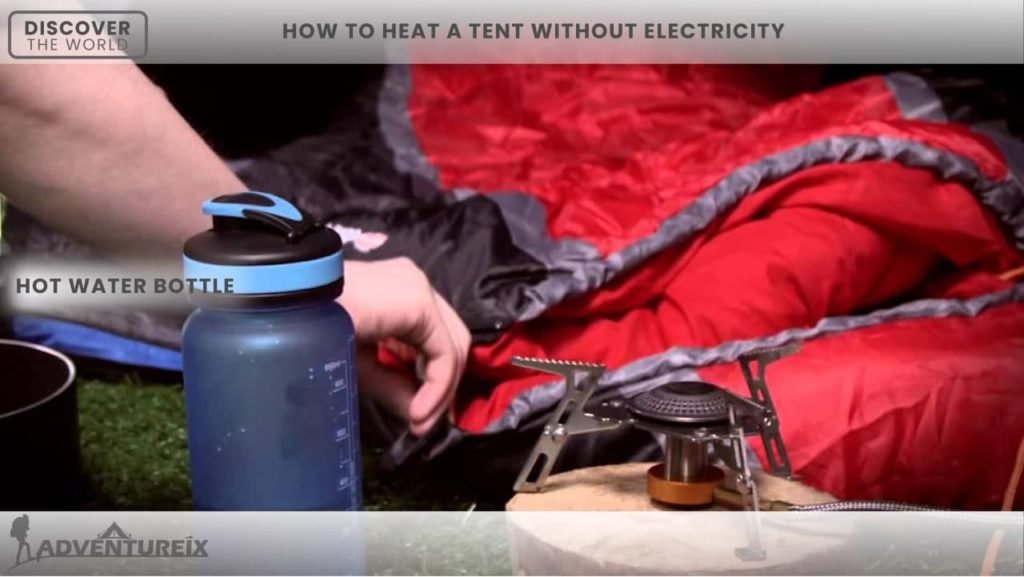
This philosophy behind using hot water bottles is similar to using hot rocks. Water can conserve a significant amount of heat and slowly release warmth for a long time on a cold night.
You will need plenty of water and a large bottle for this method. It’s best if you have a metal bottle. A lot of plastic bottles are not resilient enough for hot water. If you are using a plastic bottle, make sure it’s sturdy.
First, you should heat the water in a pan on the campfire. Then, pour it down your water bottle when the water starts boiling.
Now you can take the hot water bottle inside your camp and keep it beside you while sleeping. Unlike hot rocks, you can snuggle up with your hot water bottle and enjoy cozy warmth while you drift off to sleep.
Pros
- Doesn’t require electricity or much equipment
- Minimal preparation
Cons
- A hot water bottle can’t heat a tent against extreme cold weather
Tent insulation
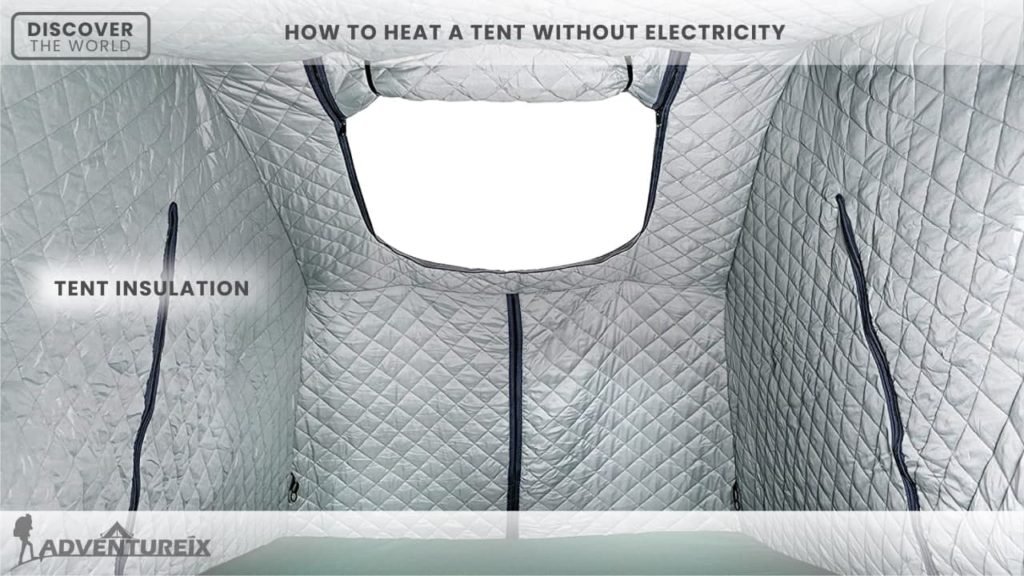
Although tent insulation won’t produce extra heat for you, it’s amazingly helpful in keeping the warmth inside the tent and protecting you from the frost-cold air of winter nights.
Usually, tents are made of thin material through which heat can easily pass through. Therefore, the heat inside your tent might escape the tent without proper insulation while winter camping.
You can find reflective materials on the market to insulate your tent. Moreover, you can use a tent carpet to insulate the cold ground.
However, you shouldn’t insulate the ground if you pitch your tent on top of an extinguished campfire. An insulating layer will keep the heat of the ground away from you.
Pros
- Not very expensive
- Prevents heat from escaping the tent
Cons
- Doesn’t produce extra heat
Pitch your tent on top of an extinguished campfire

This is an old-age tactic of tent campers to protect themselves from the cold ground. You can set up your camp over a burned-out campfire to get warm ground that will radiate heat inside your tent.
After you have extinguished the fire, dig a shallow hole. Put some firewood, hot coal, and heated stones in that hole. Then, cover the hole with some dirt.
Setting up that tent over your ground will help you stay warm throughout the night.
Pros
- Easy to do
- You don’t need to buy anything extra
Cons
- You have to set up the tent after extinguishing the fire
Frequently Asked Questions(FAQs)
What are the benefits to heat a tent?
How to heat a tent safely?
With electricity includes:
Electric radiators
Electric halogen heaters
Electric blankets
Underfloor heating carpets
And without electricity includes:
Gas-powered heaters
Heating rocks
Hot water bottle
Tent insulation
Pitching tent over a doused fire
Do you need electricity to heat a tent?
Do you need to heat a tent during summer?
Therefore it might be necessary to heat your tent during those summer nights.
Conclusion
I hope, by now, you have learned how to heat a tent with our without electricity. However, as I have already mentioned, you might want to use several of these methods together to get the best result, depending on your circumstances.
The heating methods I have explained will produce warm air inside your tent. In addition, you may want to use sleeping bags, warm clothes, thermal blankets, etc., to keep the heat from escaping and to protect yourself from the cold air outside.
Cold weather shouldn’t stop you from exploring the wild. With a camping heater or some careful and clever preparation using whatever is available to you, you can stay warm inside your tent and drift off to a cozy sleep. So have fun and go have a fantastic experience.